


Insights
Boardwave Live 2026: Five key takeaways
The next chapter isn't about whether Europe can build. It's about how far we can go.

Perspectives from Boardwave’s Silicon Valley Insider Week 2026:
Last month, Boardwave took a cohort of 16 European technology CEOs to Silicon Valley for five days of sessions with some of the most consequential figures in global technology. Across conversations at Anthropic, KKR, Meta, Okta, Atlassian, AppLovin, Wilson Sonsini and Stanford, one question kept surfacing: is the SaaS business model dying?
The answer, from every corner of the Valley, was the same: no. But it is being fundamentally reshaped. And the companies that refuse to acknowledge that are the ones in real trouble.
Here is what we heard.
The narrative circulating through investor committees and conference stages is that AI will eat the entire software industry. Public SaaS companies are down 20 to 30 per cent, often indiscriminately. The market is not distinguishing between companies that should be zeros and companies that no AI is going to replace.
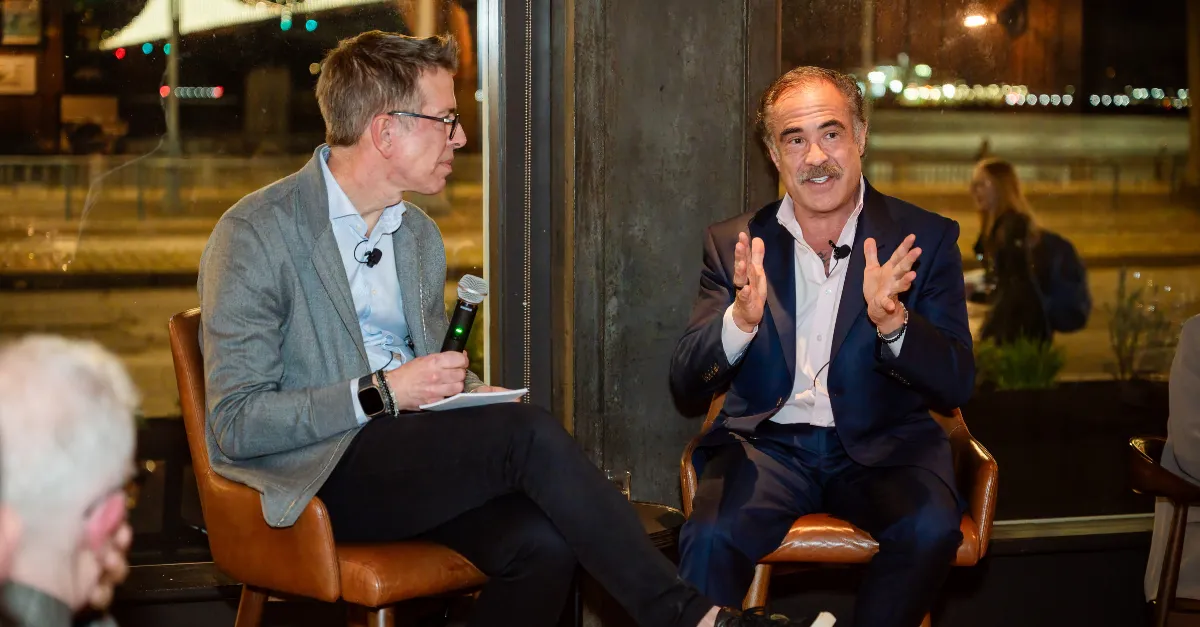
R. Martin Chavez, Vice Chairman of Sixth Street, Board Member of Alphabet, and former CFO of Goldman Sachs, was the most precise on this point. Two categories of software company are genuinely at risk. First: anyone still selling seat-based pricing with a human-operated UI for constructing workflows. Second: companies putting a thin wrapper on top of a large language model and calling it a software product. Beyond those two categories, the picture is far more nuanced.
Complex infrastructure (the kind of deep, proprietary systems that underpin data warehousing, identity management, or financial operations) is not getting replaced by an LLM. As Chavez put it, nobody is going to ask Claude to code them up a Snowflake. The companies with proprietary data, complex systems of record and deep workflow integration remain highly defensible.
Frederic Kerrest, Co-Founder of Okta, reinforced this from the enterprise side. He broke the AI opportunity into three buckets: consumer (moving fast), SMB (genuine rapid innovation, new distribution models emerging), and enterprise (going to take much longer than the hype suggests). Enterprise AI will be bought the same way enterprise software has always been bought: there will still be procurement cycles, security reviews, technology evaluations, budget approvals. Five-year contracts do not vanish because the technology is exciting.
“Things move faster and faster, but enterprise contracts have five-year terms. It is not going to move the way people think.” Frederic Kerrest, Co-Founder of Okta.
Where the consensus was sharpest was on the business model itself. If AI enables your customers to do the same work with fewer people, and your pricing is per-seat, your revenue shrinks while the value you create accrues entirely to the customer.
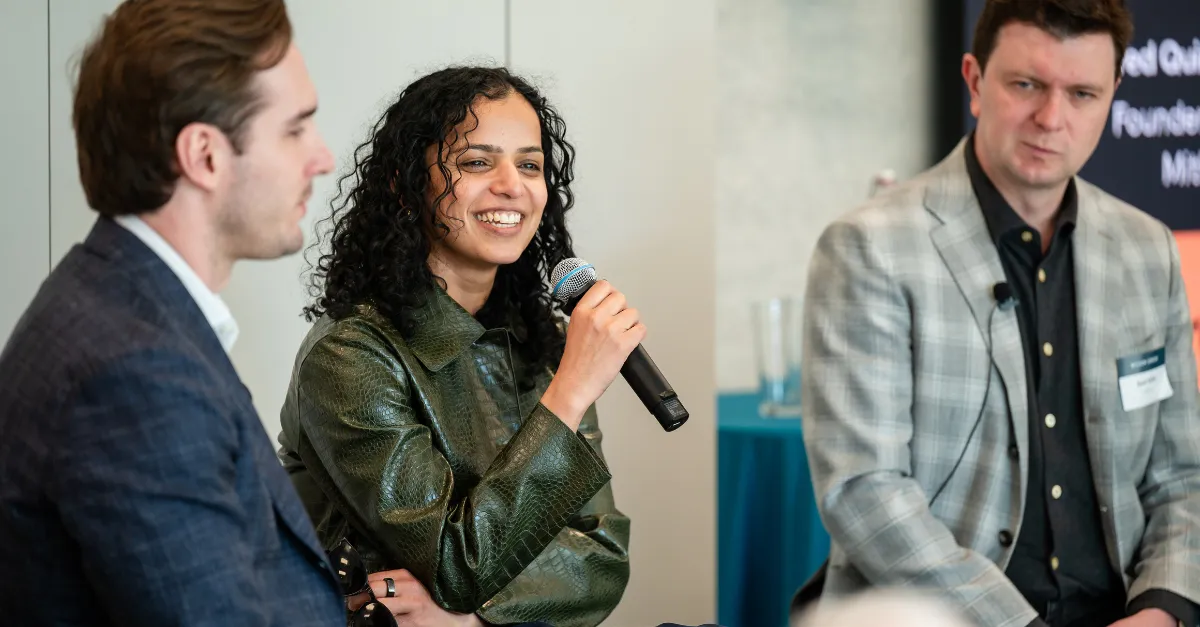
Anu Bharadwaj, former President of Atlassian, was direct: every SaaS company needs to identify a new vector of monetisation. Whether that is usage-based, consumption-based, or outcome-based depends on what you are building and selling. But the seat-based model, in its current form, is gradually undermining itself.
She was equally candid about how painful the transition will be. When Atlassian shifted from on-premise to cloud, the hardest part was explaining to investors why revenue would slow before it accelerated. The same dynamic is about to play out again. Usage-based pricing is fundamentally more volatile than seat-based revenue. Churn becomes a bigger factor. The commercial engines built over the last decade need to be rebuilt.
On outcome-based pricing – the model most often held up as the future – wasn’t without scepticism. Bharadwaj described it as trying to charge for something you do not fully understand. Nobody she has seen has made it work convincingly yet. Bobby Napiltonia, the former Salesforce and Twilio executive who spent two days with the cohort, agreed. CFOs will not sign up for it. Consumption-based pricing, where the customer understands the unit economics the way they understand the cost of petrol, feels more viable.
“Outcome-based pricing sounds intellectually elegant. In practice, nobody has cracked it. Consumption-based feels closer to the truth.”
One of the most provocative arguments of the week came from Bobby Napiltonia, who helped build Salesforce’s go-to-market machine and scaled Twilio’s partnership strategy. His confession was disarming: the SaaS playbook – the layers of SDRs, BDRs, AEs, CSMs, the Rule of 40, the multi-stage sales funnel – was never designed for efficiency. It was designed to get venture capital.
At Salesforce, he explained, the team sat in a room and invented the metrics and structures that would make the business legible to investors. The economics were never clean. One company he worked with was spending $3,800 to acquire a customer worth $300. The frameworks that emerged – the ones that defined an entire era of enterprise software – were built to justify long investment horizons and large cheques, not to build sustainable businesses.
His argument: in the age of AI, that entire architecture is collapsing. Anything a human does on a screen should now be on a path to agent automation. The future, as he described it, is the full-stack salesperson: one person, augmented by AI, doing what previously required a team of six or seven. Real-time information fed through smart glasses during customer conversations. Procurement decisions being made by LLMs that ingest materials, compare vendors, and recommend a choice without a single sales call.
His prediction was emphatic: in his lifetime, we will see the end of enterprise applications as we know them. Enterprise software as white-collar workflow will be replaced by machines that simply execute.
If there was a single prediction that united the Valley’s smartest thinkers, it was this: the future of AI in enterprise software is AI orchestrating workflows with proprietary data, invisible to the end user.
Chavez was emphatic about this. The ChatGPT moment was a 1970s-style command line interface that demonstrated product-market fit. But that is not how AI will be used in practice. The future is AI embedded so deeply into software products that the user never interacts with it directly. If your AI strategy is a chat interface, rethink it.
This framing also sharpened the advice for software companies thinking about what to build. The companies that will win are not the ones bolting an AI chatbot onto the side of their existing product. They are the ones rethinking their workflows from the ground up, asking what the process looks like when intelligence is a building material rather than a feature.
Anu Bharadwaj reinforced this with a striking data point: the cost of intelligence has collapsed. What cost $20 per million tokens not long ago now costs seven cents. That is a structural shift in what is economically viable to build. AI now the material you rebuild with, rather than a layer.
Amid the urgency, several speakers offered important caveats. Chavez provided the sharpest intellectual framework for separating what AI will disrupt from what it will not: if there is a verification function – a boolean function that returns true if the answer is correct – that is a problem AI will solve. You should not compete with it. But many of the hardest problems in business do not have verification functions. Is this a good investment? The verification function for that is: wait ten years.
LLMs are fundamentally based on correlation, and correlation is not causation. They cannot deduce causal mechanisms. They cannot reason about counterfactuals. Markets are not stationary distributions. No AI is going to predict the S&P 500. These remain deeply human problems, and the companies built around solving them remain deeply defensible.
On the development side, the gap between perception and reality was notable. Our AI panel reported that developers believe AI is making them roughly 25 per cent more productive. But the data tells a different story. The bottleneck was never code output. It is the coordination tax: the handoffs between design, engineering, QA and deployment that AI has not yet touched. The companies pulling ahead are collapsing five roles into one and rebuilding the workflow from scratch.
Running through every session was a thread about what all of this means specifically for European technology companies. The perspectives ranged from bracingly honest to quietly optimistic.
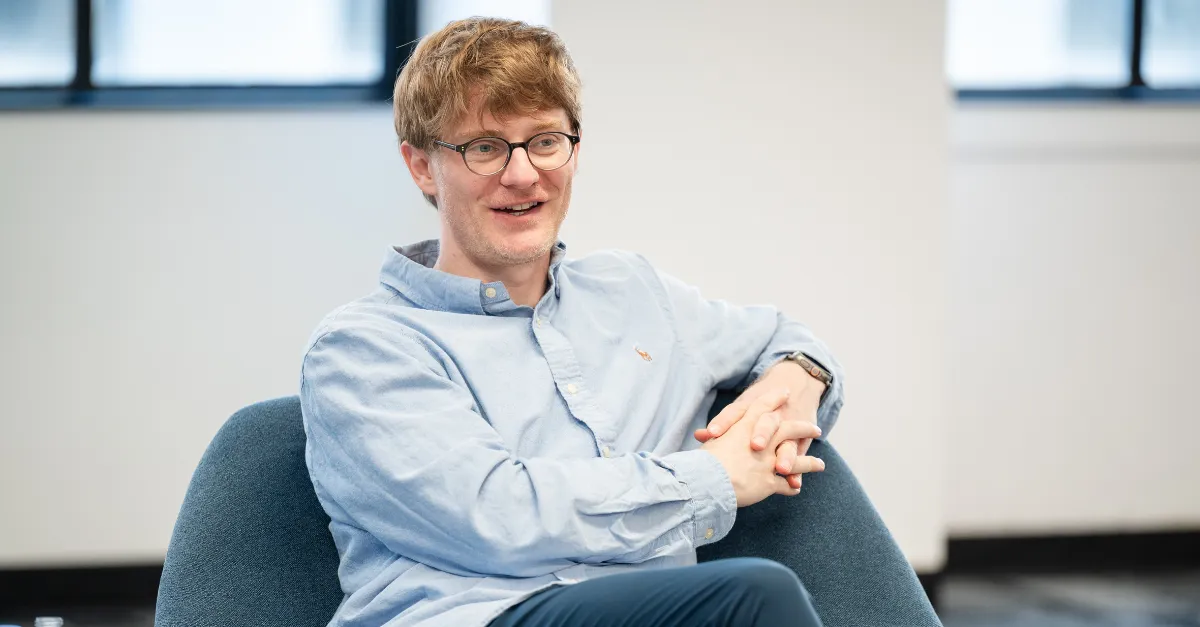
Richard Socher, Co-Founder and CEO of You.com and Recursive Superintelligence, who grew up in Germany, offered an interesting cultural observation: Silicon Valley spends all its time thinking about the future. Europe, with all its beautiful history, spends too much time looking at the past. He identified specific structural barriers – Germany’s tax on unrealised startup equity gains, regulatory over-caution, a cultural comfort with the status quo – as forces that actively prevent the European startup ecosystem from reaching critical mass.
Kerrest added a different angle. He noted that people are still going to be buying software from people for a long time. Enterprise sales is a relationship business, and European founders who understand how to build trust and navigate complex organisations have a genuine advantage – provided they are willing to be physically present in the markets they want to win.
From the investment side, George Roberts, Executive Chairman and Co-Founder of KKR, said simply that KKR loves investing in Europe and sees great opportunities. The talent is there. Ideally the conditions need to change. Defence spending was identified as a powerful accelerant for European technology infrastructure: there is no modern defence capability without cloud, AI and data sovereignty, and the money now flowing into European defence is by necessity flowing into European technology.
The consensus was not that Europe cannot compete. It was that Europe’s structural barriers – regulatory fragmentation, capital market fragmentation, talent mobility friction – need to be dismantled with the same urgency that companies are bringing to their AI transformations.
Across five days of sessions, the practical advice converged on a handful of priorities:
Incorporate agentic AI into your product roadmap immediately. If you have not started, start. If you are highly leveraged and have not started, you may already be too late. The trick is not to bolt AI onto the side of your product but find the tasks and workloads where AI genuinely transforms the end-to-end workflow.
Stress-test your pricing model. Model the scenario where AI enables your customers to need 30 to 50 per cent fewer seats. What happens to your revenue? Where does the value accrue? Identify an alternative vector of monetisation and pilot it within the next 90 days.
Get proprietary data and workflows or get out. Thin wrappers on top of LLMs are not businesses. Proprietary data orchestrated through intelligent workflows is the only defensible position in the AI era.
Rebuild your go-to-market for efficiency, not for fundraising. The SaaS playbook was designed for a world of cheap capital and expensive humans. We are entering a world of expensive capital and cheap intelligence. Redesign accordingly.
Take the European sovereignty question seriously. If your data, your AI agents and your engineering workforce all depend on US hyperscalers, you have a single point of geopolitical failure. Explore the European alternatives that are emerging and advocate for the policy conditions that allow them to compete.
Lead the transformation, do not delegate it. Top-down mandates produce theatre. What works is self-directed adoption by domain experts, clear lighthouse metrics, and the space to experiment. Find the people in your organisation who are already tinkering and give them budget, permission and a mandate.
SaaS is not dying. But the version of SaaS that dominated the last 15 years – seat-based licensing, bloated go-to-market machines, incremental annual planning – is running out of road. The companies that acknowledge this and move decisively will find themselves in a stronger position than they have ever been. The ones that wait for clarity will discover that clarity, in this market, arrives too late.
The message from Silicon Valley was urgency, not panic. And for European technology leaders, it came with a distinctly hopeful undercurrent: the talent is here, the alternatives are emerging, and the world is paying attention. There are some great SaaS businesses out there with leaders who are already reinventing themselves. You don’t have to have started as AI first to become AI first, even if you’re an established business. The question is whether Europe’s leaders – both in business and in policy – will move fast enough to seize the moment.
Boardwave’s Silicon Valley Insider Week 2026 brought 16 European technology CEOs to the Bay Area for five days of sessions with leaders from companies including Anthropic, Deloitte, KKR, Meta, Okta, Atlassian, AppLovin, Wilson Sonsini, Stanford, McKinsey and others. Our mission is to help leaders scale their companies faster, fuelling a thriving European tech and AI ecosystem via the power of community support and buying from each other as we go through this next wave of change.
For more on Boardwave’s programmes and membership, visit boardwave.org.
_(logo).svg)













.webp)









.webp)






















.svg)




.svg)
















.webp)






.webp)
%20(1)%20(1).webp)