


Insights
Boardwave Live 2026: Five key takeaways
The next chapter isn't about whether Europe can build. It's about how far we can go.
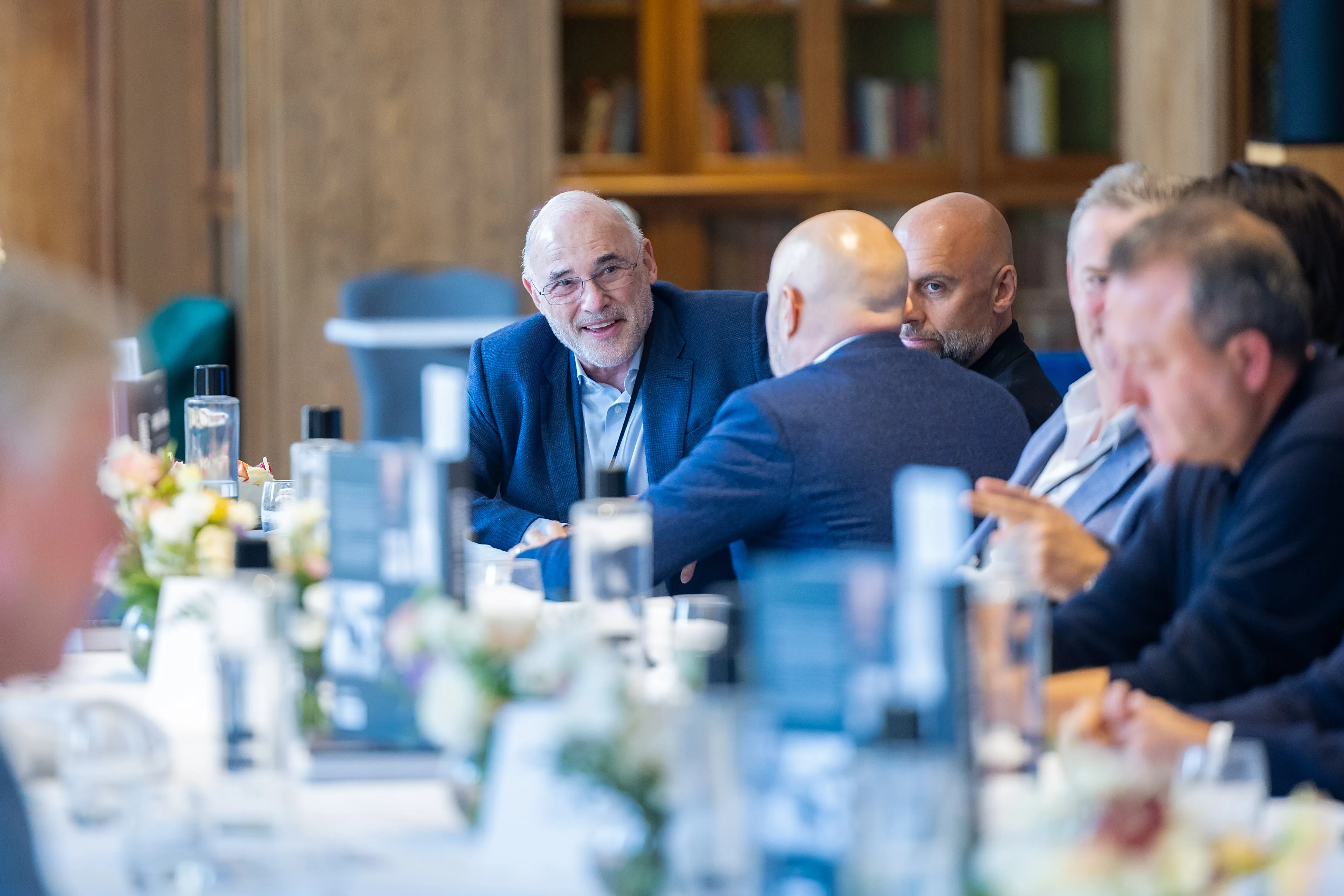
Léo Apotheker | Boardwave Board Member & Patron
As told to Amy Wilson Wyles, March 2026
There is a conversation circulating through boardrooms, investor committees and tech conferences that goes roughly like this: SaaS is dead. AI is going to eat the entire software industry. The seat-based model is finished. If you haven’t already rebuilt everything around agentic AI, you are already too late.
Like many sweeping narratives, this one contains a significant kernel of truth wrapped in a layer of exaggeration. Let me offer a more measured view - from someone who has spent decades building, running and investing in enterprise software companies, and who cares deeply about the future of European technology.
Any enterprise software company that has not incorporated AI into its product roadmap has a challenge. I am blunt about this. If you are a SaaS company, generating no or very slim margins and you have not even started to work on architecting AI into your offering and future roadmap, chances are that you are in serious trouble. You might simply not have the time and the financial means to catch up, although the good news is that it is less expensive than ever before to code using AI and unlike employees, it can work 24/7. If you haven’t yet started to think about changing your business and monetization model – it is urgent that you start doing so!
But there is nothing intrinsic about being a software company that prevents you from leveraging AI - such as agentic AI - for the benefit of your customers. After all, AI is software!
The trick is to find the relevant tasks and workloads within your enterprise software stack that genuinely make sense to transform with AI. And when you do that, you must think - as always when building good enterprise software - from an end-to-end process perspective. Bolting AI onto the side of an existing product is not a strategy. Rethinking the workload and the use cases from the ground up is.
Where I part company with the doomsayers is on the timeline and the totality. We have swung, as we so often do, from one extreme to the other. The reality will land somewhere in the middle.
Yes, AI is massively accelerating the replacement of programming by AI tools. But it does not eliminate the need for smart people to architect systems, and in particular complex platform-like, system-of-record-type enterprise applications, properly. Yes, seat-based pricing is under pressure but alternative monetization models exist. Sophisticated mission-critical enterprise infrastructure does not get replaced by a large language model overnight. Enterprise contracts run for years. Procurement cycles, security reviews, compliance requirements - these do not vanish because the technology is exciting. The transition is real, but it will still be an evolution. Moreover, probably for the first time in many years, software vendors can aspire to aim also for the payroll budgets of their clients as in the future these budgets will most likely be composed of the payroll attached to employees plus the fees paid for agentic AI.
There is a dimension to this conversation that I believe is critically important for European technology leaders, and it is not considered nearly enough when we think about the future of European software companies: sovereignty.
Think about it this way. With SaaS companies, your data usually resides with a hyperscaler. As you deploy AI agents, if you are not careful, they are also “outsourced” to an AI company running on a hyperscaler. Your programming workforce, as a software company, has been more or less replaced by AI tools running on yet another hyperscaler. In other words, the raw materials of your business (the data), your workforce (the agents) and the means of production (your programming capabilities) are all potentially out of your control and perhaps even under the control of a potentially non-friendly entity. So if this stack - or crucial parts of it - are outside of our collective sovereignty and someone decides to switch some or all of these services off, you are not slightly inconvenienced. You are completely out of business. Your workforce is gone because the agents are gone. Your programmers are gone because they have been replaced by machines you do not control. And your data is gone because it sits on infrastructure you do not control.
I know that this might sound like a hypothetical and extreme doomsday scenario. However, In the current geopolitical climate, it is a scenario every European CEO and board should be thinking about seriously.
The good news is that credible European alternatives are emerging. We have strong AI capabilities in Europe. Sovereign cloud providers are appearing in Europe and while the offerings are not perfect yet, remember that Amazon Web Services was not perfect on day one either. These European providers will get better as more sophisticated workloads run on them.
And here is the other piece of good news: we do not lack talent. Some of the foundational work in AI was done by Europeans. We produce world-class engineers in large numbers from excellent institutions. What we lack is not engineers. What we lack is companies. We lack the ecosystem of scaled European technology businesses that can absorb and deploy that talent.
That is changing. And every time the geopolitical winds shift, the incentive to build a deeper, more competitive European technology stack grows stronger.
Also, let’s question if we need complex general intelligence LLM’s to solve specific enterprise business processes. In my humble opinion we usually don’t, but instead require domain tuned smaller LLMs with well-architected orchestrations.
Defence will accelerate the shift
There is one more accelerant that people underestimate: defence spending. Europe is investing heavily in defence, and there is no modern defence capability without the technologies we are discussing: cloud infrastructure, AI, data sovereignty, and secure communications. The defence imperative will push the development of European cloud, European AI and European technology infrastructure faster than any industrial policy alone could achieve. The money flowing into defence is, by necessity, also flowing, at least partially, into the European technology stack.
As an industry, we need to push our political decision-makers and regulators to create the environment that allows European technology to prosper and scale much faster. That means several things concretely:
First, we need no barriers between the UK and the EU, or between EU member states. The fragmentation is costly and unnecessary, it slows everyone down, creates futile friction for no benefit to either side
Second, in my opinion we need a single European capital market so that companies can raise money and scale without navigating dozens of separate financial systems.
Third, we need total freedom of movement for people within European boundaries, so that if a talented engineer sees an exciting company in London, Paris or Berlin, they can go and work there without friction. And vice versa.
Fourth, we need the elimination of internal regulatory barriers so that we can treat the entire European space as a single market.
And fifth – a nice-to-have that should frankly be a must-have – we need a Buy European Act that encourages the public sector to buy European technology. Exactly what the Americans do with the Buy American Act. There is no reason whatsoever why we should not do the same and it’s something that Boardwave is passionate about actively encouraging its members to do on their platform - buy from each other, support each other’s growth and accelerate the European growth flywheel.
So am I worried about the future of European enterprise software? No. Am I worried about companies that are sitting still? Absolutely. The opportunity is real, the alternatives are emerging, and the talent is already here. But we need to move. We need to advocate, as a community, for the regulatory and political conditions that allow our industry to compete on a level playing field. We need to shed whatever inferiority complex still lingers about European technology. And we need to build.
The end of SaaS has been exaggerated. The beginning of a new era for European technology has not.
Léo Apotheker is a Boardwave Patron and one of Europe’s most experienced technology leaders. He served as CEO of SAP and CEO of Hewlett-Packard, and has held senior leadership roles across the global enterprise software industry for more than three decades. He is a passionate advocate for European technological sovereignty and competitiveness.
_(logo).svg)










.webp)







.webp)



















.svg)




.svg)












.webp)





.webp)
%20(1)%20(1).webp)