


Insights
Boardwave Live 2026: Five key takeaways
The next chapter isn't about whether Europe can build. It's about how far we can go.
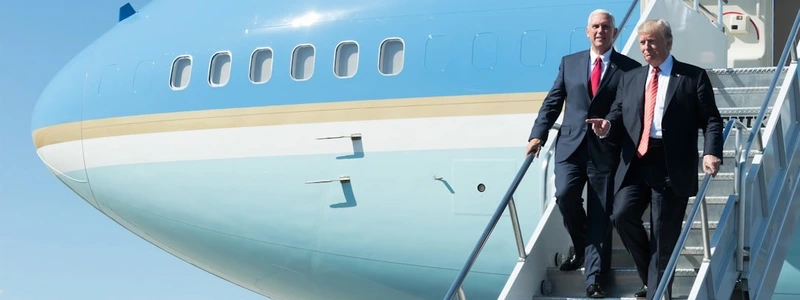
This week’s state visit by the US President, Donald Trump, to the UK is expected to bring another raft of investment and, hopefully, simplify regulatory burdens as the Government doubles down on making our sector central to its growth story.
The President isn’t coming alone. Travelling with him are Jensen Huang of Nvidia and Sam Altman of OpenAI, alongside senior figures from CoreWeave, BlackRock and Blackstone (the latter is a Boardwave Partner and they’ve already pledged a $500 billion investment into Europe). These aren’t just high-profile guests: they are the leading companies and investors building the next generation of technology, from AI and cloud computing to the data infrastructure that underpins it all. Their presence signals that this is more than a photo opportunity; it’s an attempt to lock in concrete deals that could shape Britain’s tech landscape for years to come.
In practice, the UK and US will sign a technology pact pledging to align AI regulation, open up trans-Atlantic collaboration and boost innovation in areas like quantum, semiconductors, and nuclear energy.
Ministers have said the agreement will cover standardising AI rules to make cross-border development easier, joint work on using AI to tackle public health challenges, and new mechanisms to speed up investment.
Alongside it, multi-billion-pound private investments are planned in Britain’s digital infrastructure: a major data centre project in Blyth, Northumberland, plus further hyperscale facilities for cloud computing and the launch of new “AI growth zones” across the country. BlackRock alone is reported to be ready to invest up to £500 million in UK data centres. The idea is to plug the gap between Britain’s world-class software talent and its shortage of large-scale compute power.
This deal is clearly a step in the right direction. Many of the things our sector has been calling for, regulatory clarity, cutting-edge infrastructure and serious regional investment, are on the table at once.
These policies are right at the heart of Boardwave’s mission. Britain (and much of Europe) is brilliant at starting software companies but too slow at scaling them. It takes twice as long here as in the US to hit £100m turnover.
Our 2,300-strong community was built to close that gap — connecting founders, amplifying their voices and fighting for the conditions they need to grow.
On the face of it, this week’s announcements could be exactly what our members have been asking for: harmonised rules to make cross-Atlantic partnerships easier, hyperscale compute that puts advanced AI capabilities within reach of scale-ups not just the giants, and growth zones outside London that could finally spread opportunity to regions like the North East and Teesside.
Yet, at least in the tech space, Britain appears to be pivoting hard towards American capital and standards even as Europe tries to shape its own. The question is whether we can seize these opportunities without leaving our European partners behind, and whether inward investment will strengthen or overshadow our domestic capacity.
But as always, the devil is in the details. This moment also raises bigger, more strategic questions we should be asking ourselves:
These are not small issues. They will decide whether this pact is a true turning point or another grand announcement that leaves scale-ups waiting at the door.
As these deals are signed, we’d love to hear from you:
This could be the moment Britain finally starts to match its start-up success with scale-up success, especially in AI where this huge scale compute is necessary for the next wave of innovation. But it will only happen if the benefits reach beyond the biggest players. Boardwave was created to make sure that happens.
Let’s welcome the investment, but let’s also ask the hard, strategic questions and insist on answers that work for our community. Because a truly world-class software ecosystem can’t just be delivered to us; it has to be built with us.
_(logo).svg)














.webp)










.webp)

























.svg)




.svg)
















.webp)






.webp)
%20(1)%20(1).webp)